Trending

Walk into any online casino lobby and you'll see thousands of tiles staring back at you. Slots, blackjack tables, live dealer wheels, video poker variants, crash games, bingo rooms. To a newcomer it all looks like the same product dressed up in different colors. It isn't. Every category on that screen is built on a different mathematical engine, appeals to a different type of player, and rewards a different set of skills. Understanding those differences is the single fastest way to stop gambling blind and start playing with intent.
This isn't a lecture about discipline or a list of warnings. It's a practical breakdown of what actually separates one game from another, with the numbers and quirks that veteran players already know.
Slots are the bread and butter of iGaming — somewhere north of 70% of all casino revenue globally comes from them. The reason is simple: no decisions, no strategy, just a spin button and a randomized outcome. But that simplicity hides enormous variation.
Two slots with the same theme can behave nothing alike. Consider these levers:
Practical takeaway: if you have a €100 bankroll and want a couple of hours of entertainment, a medium-volatility slot at 60–80 cents per spin is far more sensible than a high-volatility title at €2. If you're chasing a big score, expect brutal dry spells and size your bets accordingly.
This is where the skill conversation begins. Unlike slots — where RTP is fixed and unbeatable — table games have rules you can influence. slot mahjong is a solid starting point for anyone new to this.
Basic strategy (a chart of the mathematically correct play for every hand combination) reduces the house edge to roughly 0.5% on a standard 3:2 blackjack table. Play badly — hit on 16 against a dealer's 6, split tens, take insurance — and you can easily double or triple that edge for the house. Card counting can flip the edge in your favor, but modern software, continuous shuffling machines, and casino bans make that a tough living online.
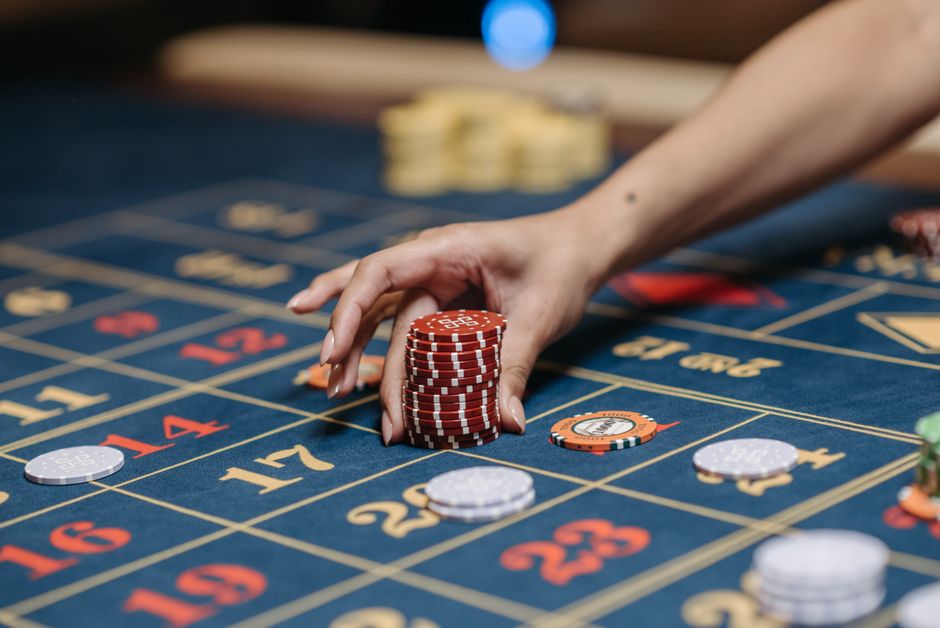
No strategy changes the math. European single-zero roulette has a 2.7% house edge; American double-zero is 5.26%. That's the entire difference between the two wheels, and it's a big one over hundreds of spins. Always pick European or French rules if given the option.
One of the lowest edges in the entire casino: banker bets sit around 1.06% (after commission), player bets at 1.24%. Ties pay 8:1 but carry a fat 14%+ house edge. Skip them.
The throughline here: table games give you a fighting chance with modest edges, but only if you've done the reading. Guessing at strategy costs real money.
Poker is the odd one out in the iGaming world because you're not playing against the house — you're playing against other people, and the house just takes a rake (typically 2.5% to 5% of each pot, capped). That means a skillful player can show a long-term profit. No slot machine will ever offer that.
But poker is also brutally competitive, especially online. The player pool at low stakes is nothing like the soft home games of the 2000s. If you're starting out:
The rake is the silent killer. At micro stakes, a tough table with a high rake can make winning nearly impossible regardless of skill.
Live dealer games — blackjack, roulette, baccarat, game shows like Crazy Time or Lightning Roulette — blend the trust of real physical equipment with the convenience of online play. House edges are near identical to their RNG counterparts, but the pacing is slower and the atmosphere more social. Some players prefer them because they can see the ball, the cards, the wheel.
Crash-style games (Aviator, Bustabit) sit in their own weird category. You set a cash-out multiplier, the multiplier climbs, and it can crash at any moment. The house edge is embedded in the crash distribution — usually around 1% to 3% — but the psychological pull is intense because the outcome unfolds in real time. These are among the most volatile products in iGaming.
Once you understand the mechanics, the boring old advice suddenly makes sense: play what fits your temperament and bankroll, not what has the flashiest graphics.
The mistake most players make is drifting between categories without ever learning the math behind any of them. They chase a slot bonus, dump the winnings on roulette, then try to recover at a poker table where they're outclassed. Each game has its own rules, its own edge, and its own rhythm.
iGaming isn't one product — it's a dozen different mathematical ecosystems sharing a login screen. Slots will never let you outskill the RNG, but they can be enjoyed with the right expectations and volatility. Table games reward the handful of players who bother to learn basic strategy. Poker remains the only discipline where a disciplined, studious player can reliably take money off the table instead of feeding it. The smart move isn't to find the "best" game — it's to understand the one you're actually sitting at.